
Introduction to 360 Virtual Tour Cameras
360 virtual tour cameras are rapidly emerging as a significant technology in 2022. In the wake of the COVID-19 pandemic, the world has increasingly embraced virtual solutions. These powerful and impactful technologies are now becoming more accessible to consumers, with prices for dedicated 360 virtual tour cameras now often falling below $1,000. While professionals and hobbyists have utilized these cameras for years, we will delve into various aspects of 360 virtual tour cameras. We will begin with a clear definition, explore available dedicated cameras, discuss DSLR capabilities for 360 panoramas, and cover post-production workflows and display methods for your new camera products.
Defining a 360 Virtual Tour Camera
The Oxford English Dictionary defines panoramic as ‘with a wide view surrounding the Observer; sweeping’. Many cameras can capture panoramic images. Most smartphones can create panoramic photos by slowly panning across the horizon. With applications like the Google Street View app, users can now capture 360 virtual tour images with their phones. While these are automatically stitched, the quality is generally lower than that of dedicated 360 virtual tour cameras or high-quality DSLRs employing independent stitching software. Some 360 virtual tour cameras feature dual 180-degree lenses, such as the Ricoh Theta Z1. Others, like the Matterport Pro2, capture 360-degree images through a rotational motion, similar to a smartphone. Drones also function as 360 virtual tour cameras, offering unique aerial perspectives and high precision. We will discuss cameras that compensate for their blind spots through mechanical means (Pro2, Drones, some mobile apps like Cloudpano Capture App).
Exploring 360 Virtual Tour Camera Options
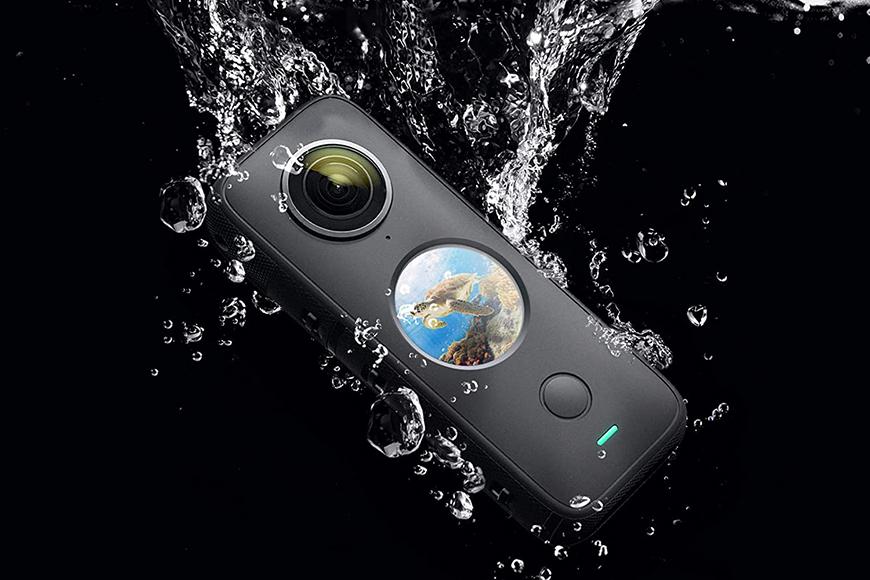
The market offers a wide array of 360 virtual tour camera options, with varying capabilities. Strong brands have introduced cameras to suit diverse budgets, from aspiring enthusiasts to seasoned professionals. The Insta360 One X2 is a notable option, featuring 5.7k 360 image capture, a 30-foot waterproof rating, AI editing, and voice control. However, for a dedicated 360 virtual tour camera, its fixed f/2.0 aperture and small 1/2.3-inch image sensor may result in upscaled video and less-than-optimal image quality. Coupled with a hyper-exposed glass lens and lack of GPS, the Insta360 One X2 is better suited for personal use. For a more professional solution, Insta360 offers the Insta360 Pro II at a higher price point. The Pro II excels with 4K streaming, 8K video capture from six 200-degree lenses, built-in GPS, native VR Adobe extension, and live previews. It is also compatible with the Matterport ecosystem.
While a high-end camera can simplify the process and enhance deliverables, it’s not essential for creating great virtual tours. The Ricoh Theta brand also provides compelling options. The Ricoh Theta SC2, priced around $296.95, offers 12-megapixel resolution and 4K video, making it an accessible entry point, though it’s primarily for personal use and comes in various colors. The Ricoh Theta Z1, priced at approximately $1,049.00, is considered a flagship model for serious virtual tour enthusiasts. It boasts a 1-inch imaging sensor, 52GB of internal storage, 4K video capabilities, a vast library of third-party plugins, and a strong user base. With four-way audio and internal stabilization, the Z1 is ideal for VR content creation and is Matterport compatible.
360 Virtual Tour Cameras and the Matterport Ecosystem
Matterport is a dominant force in the virtual tour industry. Their flagship model, the Matterport Pro 2, distinguishes itself with built-in LIDAR and a unique capture method involving a tripod-mounted spin to build 3D models. While this process takes over 30 seconds per panorama and doesn’t capture directly above or below, making it not a true 360 camera, it is integrated within the Matterport ecosystem. However, Matterport has faced criticism for its business model, including undercutting the market and high hosting fees, leading to a declining user base.
Beyond dedicated cameras, other devices can produce impressive panoramic images. Drones, for instance, offer high precision, built-in GPS, and AI, capturing stunning aerial panoramas. DJI drones, a popular brand, often include built-in panoramic functions and AI stitching software, though commercial applications may require post-production. Traditional DSLR cameras can also capture 360 panoramas, but this process is more involved, requiring specialized tripod heads to mitigate stitching errors.
Hosting and Displaying Your 360 Virtual Tour Content
The output from your 360 virtual tour camera can be hosted on various platforms. While Matterport is prominent, more flexible options like 3DVista and cloudpano are available. Facebook and YouTube also support 360 content, though they are less suited for comprehensive tours. The way a consumer interacts with the tour can be refined through the platform’s layout and construction, leveraging the strengths of each individual service. Many platforms offer customization options.
Conclusion: The Future of 360 Virtual Tour Cameras
In conclusion, dedicated 360 virtual tour cameras are a rapidly evolving tool for photographers. With a wide range of options from around $300 to nearly $5,000, the market offers significant variability. All these cameras share the fundamental ability to allow viewers to explore a space beyond a static 2D view, offering a more engaging and practical experience. As the world continues its virtual transformation, demand for virtual applications will grow. Mastering content generation in this field presents profitable business opportunities. While a 360 virtual tour camera represents a significant investment, it opens doors to a fun and engaging industry with potential for passive income and unique career paths. Forward-thinking individuals who develop innovative ideas can significantly advance this technology and its applications.
Frequently Asked Questions about 360 Virtual Tour Cameras
What is a 360 virtual tour camera?
A 360 virtual tour camera is a device designed to capture spherical images or videos, allowing viewers to look in any direction within the captured environment, creating an immersive experience often used for virtual tours of properties or locations.
Are 360 virtual tour cameras becoming more affordable?
Yes, dedicated 360 virtual tour cameras are becoming more accessible, with many models now priced under $1,000, making them available to a wider range of consumers and professionals.
What are some popular 360 virtual tour camera brands?
Popular brands include Insta360 and Ricoh Theta, offering a range of models from entry-level to professional-grade equipment.
Can I use my smartphone to create 360 virtual tours?
Yes, many smartphones have apps like Google Street View that allow you to capture 360 images, but the quality is generally lower than that of dedicated 360 cameras.
What is the difference between Insta360 Pro II and Matterport Pro2?
The Insta360 Pro II is a high-end 360 camera with advanced features for streaming and video capture, while the Matterport Pro2 is designed for creating 3D models with built-in LIDAR, though it has limitations in capture speed and field of view.
Where can I host my 360 virtual tour content?
You can host 360 virtual tour content on platforms like Matterport, 3DVista, cloudpano, as well as social media platforms like Facebook and YouTube.


